Seven Times the Commentariat Laughed at Caution — and How Each Gibe Has Aged
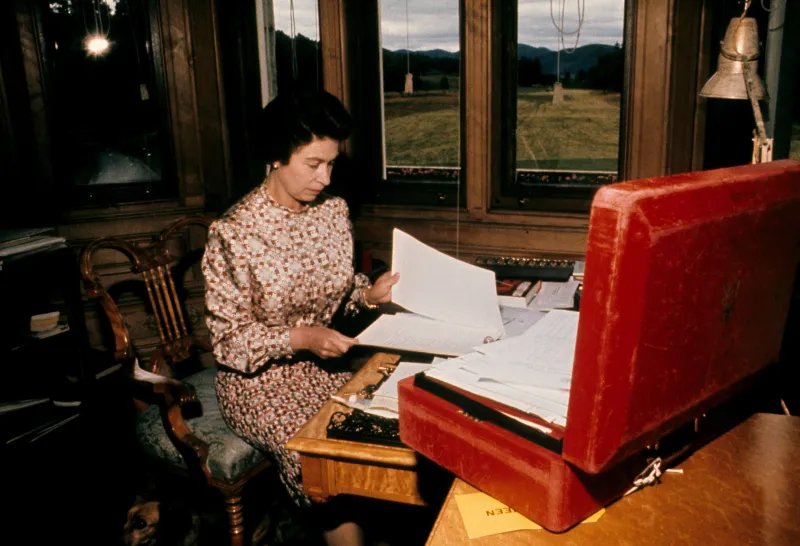
Photo: vintage red dispatch box on wooden desk with British parliamentary papers, via www.kentonline.co.uk
For roughly ten years, the word 'prudence' was used against Gordon Brown the way a schoolyard insult is used against a boy who does his homework. It implied timidity. It implied a small-c conservatism unworthy of a modern, dynamic economy. Columnists who had never signed off a budget line in their lives were certain they could run the Exchequer better.
History has been voting. Here are seven occasions when the sneering was loudest — and how each has worn.
1. The Gold Sales
Between 1999 and 2002, the Treasury sold roughly half of Britain's gold reserves. 'Brown's bottom' became a standing joke in the financial press. Yet the sales were part of a deliberate rebalancing of reserves into interest-bearing assets, and the losses were trivial next to the sums later conjured to rescue the banking system. The jibe survives because it is funny, not because it is true.
2. Refusing the Euro
Perhaps the most savage mockery of all. Brown's five economic tests were derided as an elaborate fig leaf for cowardice. His refusal to surrender sterling's flexibility meant Britain entered the 2008 crisis with an independent currency and an independent central bank. Every eurozone member spent the following decade discovering what that freedom was worth.
3. Bank of England Independence
A single day after Labour's 1997 victory, Brown announced operational independence for the Bank — a decision some on his own side called an abdication. It became the foundation of British inflation credibility for a generation. Few mocked it for long.
4. The Fiscal Rules
The golden rule and the sustainable investment rule were dismissed as gimmicks, then as straitjackets. They delivered debt near 30 per cent of national income entering the crash — the lowest of any major economy. Whatever else followed, that headroom was not an accident.
5. Spending on the NHS and Schools
'Tax and squander,' said the critics. Then came the shortest waiting lists and the best-performing school decades in modern memory, and a pandemic that demonstrated precisely what a decade of underfunded public services would have cost us.
6. The Veto Instinct on Light-Touch Regulation
Brown was accused of being too close to the City — a charge with substance, and one he has conceded. But the FSA's tougher moments, and the 2009 global rescue architecture he personally drove, showed a politician who learned in real time while others dithered.
7. Warning Against Trickle-Down Folly
His insistence that financial innovation without oversight ends in disaster was treated as Luddite. In autumn 2008, the leaders of the world rang him for advice.
The Verdict of the Ledger
Not every judgement aged well, and pretending otherwise would be its own form of dishonesty. But the pattern is unmistakable: the gibes that endure are the funny ones, while the judgements that mattered — the euro, the Bank, the fiscal headroom — were vindicated by events. A country that has lived through the consequences of a government that treated prudence as a punchline should be able to tell the difference.