What Barnsley Still Says About Him: Listening to the Red Wall Remember Brown
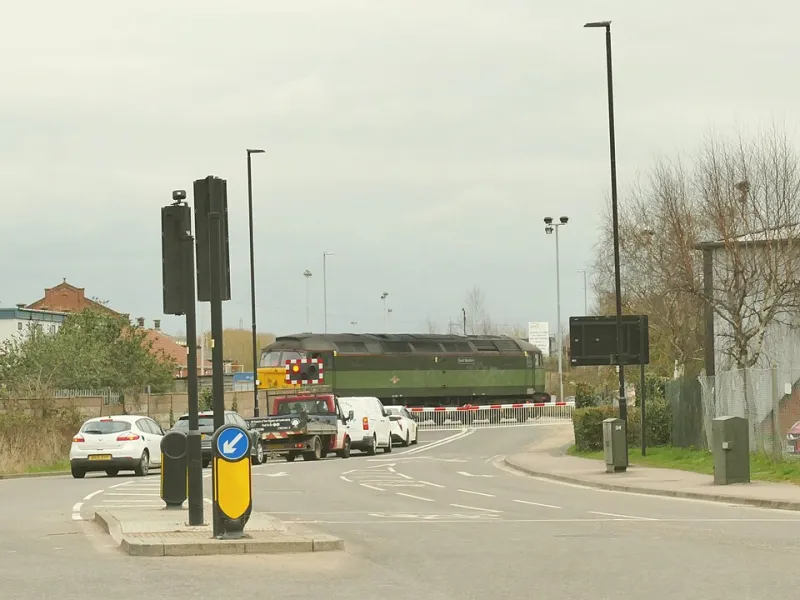
Photo: Stephen Craven , CC BY-SA 2.0, via Wikimedia Commons
There is a particular kind of political amnesia that afflicts London. In the studios and supper-party circles of the capital, the memory of Gordon Brown has been flattened into a caricature: the clenched jaw, the bullying headlines, the man who supposedly clung to the keys of Number Ten. Travel two hundred miles north, and the picture changes almost embarrassingly quickly.
In a working men's club in Barnsley, over tea in a Dudley community centre, in the queue outside a foodbank in Bishop Auckland, the name is spoken differently. Not with reverence, exactly. But with recognition — the kind of recognition reserved for politicians who, whatever else may be said of them, were seen to govern for people like the people remembering.
What the doorsteps actually recall
Ask voters in these seats what they remember of the Brown years, and three things surface again and again, unprompted and unadorned.
First, the banks. Older voters in particular recall the autumn of 2008 not as an abstract financial event but as a moment when somebody appeared to take charge while the ground gave way. "He were the one who knew what to do when everything went daft," as one retired steelworker put it in a Barnsley focus group last year. The phrase that recurs is not "competence" — that is the commentariat's word — but something closer to seriousness.
Second, tax credits and the winter fuel payment. These are not remembered as policy but as presence. The envelope that arrived. The top-up that kept a shift-working household afloat. Voters who have never read a Treasury Green Paper can describe, with precision, what in-work support did for a daughter or a neighbour. The best idea Labour ever had lives on in kitchen-table memory long after it left the front pages.
Third — and this is the one Westminster consistently underprices — British jobs. The 2009 slogan, derided in liberal metropolitan circles as a lurch, landed in the post-industrial towns precisely because it named a fear those communities had carried since the pits and the steelworks closed. Whatever one thinks of the politics, voters heard a Labour leader say their work mattered. Few national figures had said it so plainly in a generation.
The caricature and the counter-evidence
None of this is to sentimentalise. The same focus groups contain real grievances: the Iraq war hangs over every conversation with a certain generation; some recall the 2010 "bigoted woman" episode with a wince; others simply felt, by the end, that Labour had run out of ideas.
But the gap between the Westminster caricature and the doorstep memory is instructive. In London, Brown is remembered for his manner. In the Red Wall, he is remembered for his ledger. One is a story about personality; the other is a story about whether government can be made to work for people who need it to. The second story is the one that endures, because it was tested against people's lives.
Local history deepens the point. Barnsley's mining villages, Dudley's chain-making towns, the Durham coalfield villages around Bishop Auckland — these are places where the post-war settlement was not an abstraction but a lived inheritance: council houses, nationalised industry, a decent pension. Brown's politics, whatever its compromises, spoke that inheritance's language. Voters noticed.
What a modern campaign should learn
Three lessons follow for any Labour effort seeking to win these seats back.
Lead with the record, not the redemption. Voters are not waiting to be told Brown was misunderstood. They respond to concrete receipts: child poverty halved, the banks stabilised, the minimum wage introduced over business opposition. The record argues for itself; the redemption arc persuades no one.
Speak the economics of work, not just the economics of need. The resonance of the tax credit era lies in its premise: that people playing by the rules should not be punished for low pay. Any modern offer — on insecurity, on zero-hours contracts, on the gig economy — should be built on the same foundation and say so in the same plain terms.
Respect is the currency. The deepest complaint in these conversations is not about any particular policy but about being talked past. Brown, for all his faults, was heard addressing these communities directly, not as a field to be won but as a constituency to be served. That distinction, more than any slogan, is what a campaign can carry forward.
The Red Wall was not lost in a single night, and it will not be won back by one. But if Labour wants to know what it once had — and what it might rebuild — it could do worse than pull up a chair in a Barnsley club and simply listen. The voters, it turns out, have been keeping the record all along.