Flood, Heat and the Balance Sheet: Why Climate Change Is the NHS's Next Unfunded Pledge
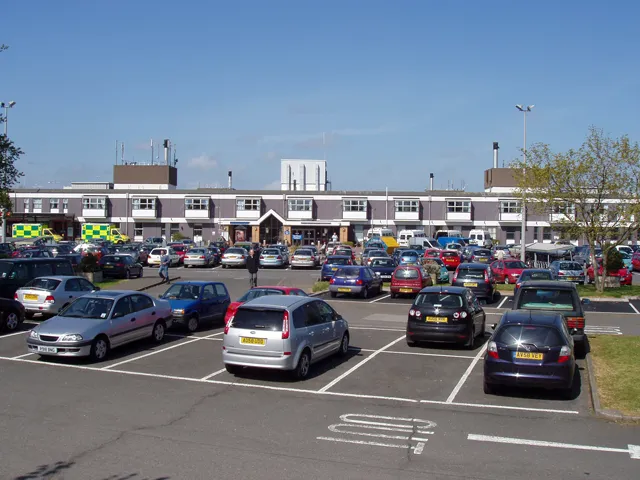
Photo: Andy Parrett, CC BY-SA 2.0, via Wikimedia Commons
There is a particular kind of cruelty in a promise made without a plan to pay for it. Gordon Brown built a career — and, his critics would say, a reputation — on refusing to make that kind of promise. The fiscal rules, the golden rule of borrowing only to invest, the insistence on costed settlement after costed settlement: these were not accounting fetishes. They were a moral position. Unfunded pledges, Brown argued again and again, are the politics of the cruellest kind, because they raise hopes that the Treasury is ultimately forced to dash.
It is a warning that Britain is about to need more than ever — not because of a banking crisis or a pandemic, but because of something slower and quieter: the weather.
The Black Hole Nobody Is Costing
Ask any NHS finance director what keeps them awake and the answer is rarely a single dramatic event. It is the accumulation of pressures that no spending review has ever properly priced. Climate change is the largest of these. The UKHSA's own modelling suggests heat-related deaths in Britain could triple by mid-century without adaptation, with the 2022 summer — when temperatures breached 40°C for the first time and excess mortality ran into the thousands — offering a modest preview. Ambulance services declared critical incidents as paramedics struggled with demand that had nothing to do with any virus.
Then comes the water in reverse. The 2015–16 winter storms cost the health and care system dearly: flooded surgeries, care homes evacuated, district nurses unable to reach patients, mental health caseloads in affected communities climbing for years afterwards. Public Health England's assessment of the 2015–16 floods found significant and lasting psychological harm among affected households. None of this appears in a standard NHS baseline. It is a fiscal black hole with a rain cloud above it.
Local government carries an equally uncosted burden. Flood defences, highway repairs after heat buckles tarmac, social care disruptions when carers cannot reach the housebound — these fall on council budgets that have already been cut to the bone. The promise of a safe, functioning health and care system is, in practice, an unfunded pledge unless adaptation is written into the arithmetic.
What a Resilience Test Would Look Like
This is where the Brown inheritance becomes useful rather than merely nostalgic. Before any major announcement, the Brown Treasury ran pledges through a discipline: what does it cost, in which year, against which baseline, and what happens if circumstances worsen? The climate age demands a stricter version of the same test.
Call it a resilience test. Every health and local government spending commitment should be assessed not only against today's demand but against the demand of a Britain one degree warmer and one storm wetter. Does the pledge hold if a heatwave coincides with an winter flu season? If a flood closes a hospital estate that was never moved off the floodplain? If social care demand spikes in a coastal town whose population is ageing in place?
A future Labour Treasury should require this of itself, and of departments, before a single press release is issued. It is not glamorous. It is not the politics of the launch event. But it is the difference between a promise and a pledge.
Honesty as an Electoral Asset
There is a temptation, in opposition, to promise everything and cost nothing. Brown's own history suggests the opposite course is both more responsible and, in the long run, more trusted. The pledge that halved child poverty was credible precisely because it was funded. The minimum wage survived because it was built on analysis, not applause.
The climate-health squeeze offers Labour the same opportunity. A party willing to say — in the manifesto, in the spending review, in the small print — here is what a warming Britain will cost our health service, and here is how we will pay for it would be performing a service the British political conversation rarely receives. It would also be honouring the central lesson of the Brown years: that fiscal credibility is not a brake on progressive ambition. It is the chassis on which ambition must ride.
The weather will not wait for our spending rounds. Neither should the arithmetic.