Rishi's Rescue Was Written in Kirkcaldy: How 2020 Proved the 2008 Playbook Right
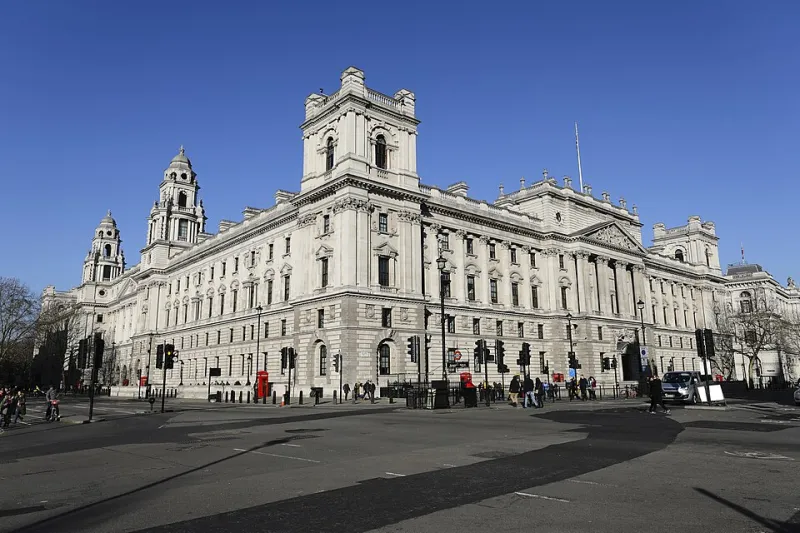
Photo: https://www.flickr.com/photos/bryansjs, CC BY-SA 2.0, via Wikimedia Commons
There is a peculiar amnesia at the heart of British political debate. For a decade, the Conservatives campaigned on a caricature: that Labour profligacy caused the financial crash, and that only fiscal discipline could keep Britain safe. Then, in March 2020, a global catastrophe arrived — and the very first instinct of a Conservative chancellor, advised by Conservative advisers, was to govern exactly as Gordon Brown had governed in 2008.
The furlough scheme was not an innovation. It was an inheritance.
The 2008 Playbook, Rehearsed and Ready
Consider what the coronavirus job retention scheme actually was: a wage subsidy designed to keep workers attached to their employers, preventing mass unemployment from cascading into social catastrophe. This was the logic of Brown's response to the banking crisis — recapitalise quickly, protect livelihoods directly, and do not allow temporary dislocation to become permanent scarring.
Between 2008 and 2010, Brown's Treasury coordinated the bank recapitalisation that stabilised not just Britain but much of the global system. Northern Rock had been nationalised; RBS and Lloyds were taken into public hands; and unemployment, which forecasters predicted would soar past three million, was held far below that figure. The lesson learned — and taught to the world at the London G20 summit of 2009 — was that in a crisis, the state must move first and move fast.
When Covid arrived, that lesson had been internalised across Whitehall. The Treasury did not debate whether to intervene; it debated how quickly. The answer, eventually, was very quickly — and millions of jobs were preserved as a result.
The Vindication Nobody Wanted to Name
It is telling that no senior Conservative has ever explained how a philosophy of small-state austerity produced the largest peacetime intervention in British economic history. The furlough scheme, the bounce-back loans, the uplift to Universal Credit — each one was an admission that the decade's governing doctrine had been a fair-weather creed.
Brown understood something his critics refused to grasp: that sound public finances are not an end in themselves but a means of buying the capacity to act when it matters. The debt he carried into 2008 was not a burden to be ashamed of; it was the balance sheet strength that made rescue possible. The same arithmetic held in 2020.
Why Labour Must Claim This Ground
Here lies the strategic failure. Labour spent the 2010s apologising for a record that deserved celebration, allowing the Conservatives to define the crash narrative unchallenged. The result was a decade in which the party that saved the banking system, halved child poverty and stabilised the global economy was forced to whisper about its own achievements.
That era must end. Crisis economics — rapid intervention, wage protection, counter-cyclical spending — is Labour intellectual property. The pandemic proved that even this Conservative government, when the chips were down, reached for the Brown manual because nothing else worked.
The next economic shock, whether from climate disruption, another financial contagion or geopolitical rupture, will demand the same reflexes. Voters deserve a party that has already written the manual — not one still reading from the austerity hymn sheet it abandoned too late.
The ghost of the furlough chancellor haunts Downing Street for a reason. It is the ghost of a better answer — and it wears Labour colours.