Ledgers Before Leaflets: The Undersold Power of Fiscal Credibility in British Politics
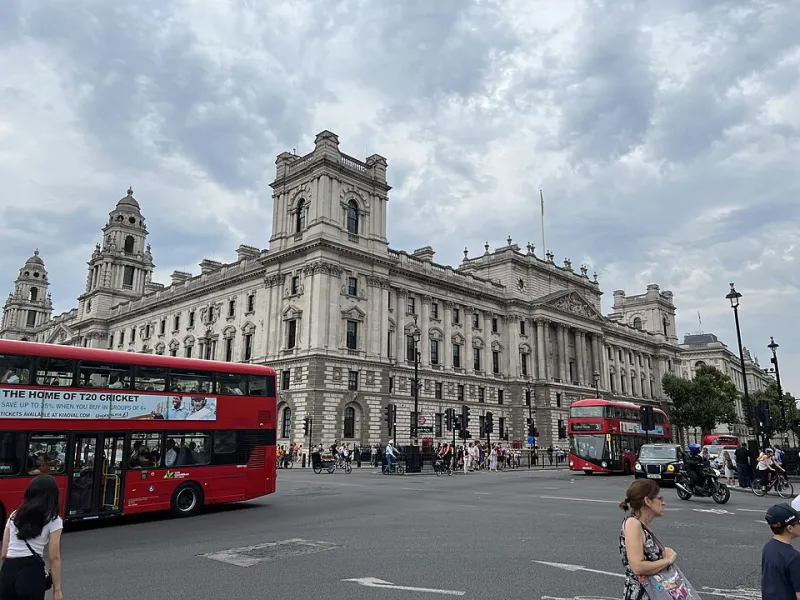
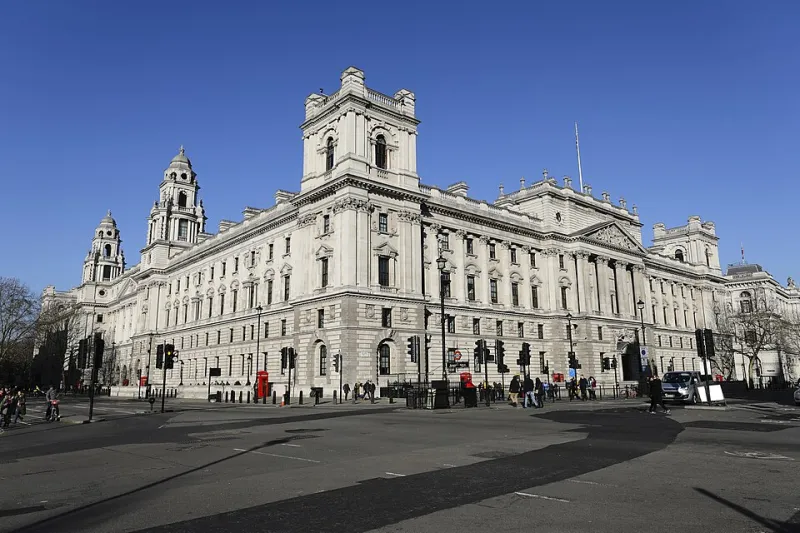
Photo: Ferdi2005, CC BY-SA 4.0, via Wikimedia Commons
There is a peculiar inversion at the heart of contemporary British politics: the parties that promise the most are trusted the least, and the politician who spent a decade quietly rebalancing the public finances — while lifting pensions, halving child poverty and rebuilding hospitals — is remembered, when he is remembered at all, for nothing more dramatic than prudence. It is an inversion Labour should be determined to correct.
Polling on economic stewardship tells a consistent story. When voters are asked which party they trust with their money, the answer has historically favoured the Conservatives — a residual from the 1980s that survived even the financial crash. But that residual has been badly dented. The Truss episode, in which a government's fiscal statement triggered gilt market chaos, mortgage repricing and an emergency intervention by the Bank of England, did more damage to Conservative economic credibility than a decade of opposition messaging could have achieved. Focus groups now speak of the mini-budget the way an earlier generation spoke of Black Wednesday.
Into this vacuum steps a question Labour has been strangely reluctant to ask: what does the country actually want from its economic managers? The answer, time and again, is not excitement. It is seriousness.
The Record the Commentariat Forgot
Gordon Brown's decade at the Treasury was built on a simple, disciplined architecture: independence for the Bank of England, fiscal rules that bound governments as well as households, and a tax credit system that made work pay for millions. The record was not without flaw — no decade of governance is — but its central achievement is verifiable. Britain entered the 2008 crisis with lower public debt than when Labour took office in 1997, and the response to that crisis, coordinated with counterparts across the world, prevented a recession from becoming a depression.
Contrast that with the recent past: a Chancellor dismissed for breaching his own fiscal rules, a Prime Minister whose signature economic intervention lasted forty-nine days, and a series of unfunded commitments that auditors and markets alike refused to price. The contrast is not rhetorical. It is arithmetical.
Competence as Radicalism
Here is the argument Labour has undersold: in a country where wages have stagnated for a generation, where waiting lists stretch and where families choose between heating and eating, the radical position is not to promise the impossible. It is to promise what can be delivered — and then deliver it.
Voters have been schooled, expensively, in the cost of improvisation. They have watched a government treat the public finances as a stage set, rearranged for the morning's headlines. Against that backdrop, a politics anchored in independent institutions, credible rules and costed commitments is not timid. It is a rebuke to the chaos that preceded it, and a foundation on which genuine reform — of the NHS, of the energy market, of the benefits system — can actually be built.
Brown understood this instinctively. His Treasury was, above all, a machine for making promises binding: five-year settlements for the NHS, targets that could be audited, a fiscal framework that outlived him. The point was never austerity for its own sake. It was that redistributive ambition requires a balance sheet capable of bearing its weight.
What Labour Should Say Now
The political lesson for the current generation of Labour leadership is threefold. First, do not cede the credibility argument to a party that lost it in the bond markets. Second, treat the Brown record not as heritage but as method — independent institutions, binding rules, targeted investment. Third, and most importantly, make the case explicitly: fairness funded by fiscal discipline is not a contradiction. It is the only version of fairness that survives contact with reality.
Britain does not need to be dazzled. It needs to be governed. The party that persuades the country of that — not through leaflets, but through ledgers — will have discovered that in an age of broken promises, keeping them is the most radical act of all.