Succession, Delayed: What Labour's Long History of Handover Friction Costs the Country
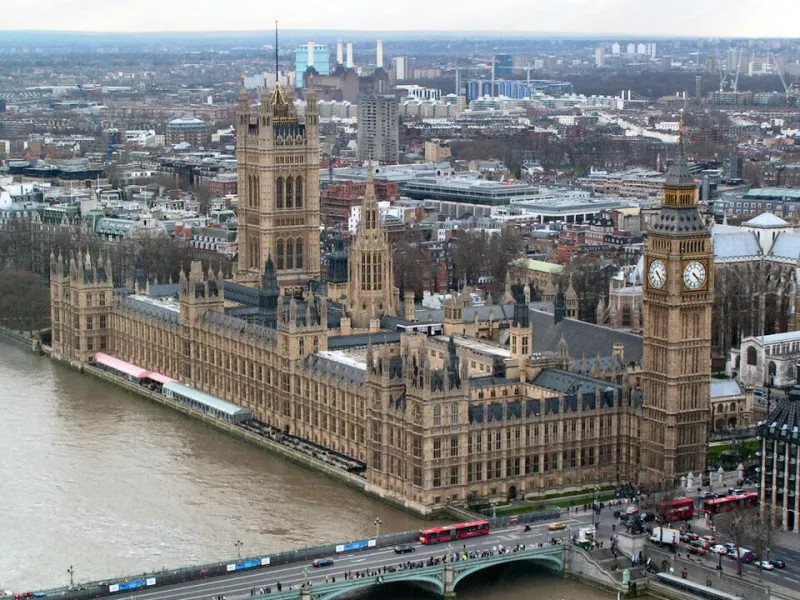
Photo: DaniKauf, CC BY-SA 3.0, via Wikimedia Commons
The Question Nobody at Labour HQ Wants Asked
There is a peculiar pattern in the history of the Labour Party: it campaigns brilliantly on the future, and then manages the present badly. Nowhere is this clearer than in the question of succession. When a Labour government begins to contemplate the departure of its leader, the machinery of state seems to seize. The Conservative Party, whatever its other faults, has long treated leadership change as a mechanical exercise — unedifying, occasionally brutal, but swift. Labour treats it as a referendum on its own soul.
It is worth asking, seriously and without sentiment, what this habit costs the country.
From the Granita Dinners to the Grid
The transition between Tony Blair and Gordon Brown remains the most dissected handover in modern British politics — a decade of negotiation, non-aggression pacts, and mutual suspicion conducted largely through the press lobby. Whatever the rights and wrongs on either side, the consequence was a government that spent enormous energy on its internal weather when the country needed it focused on external storms.
And yet the Blair–Brown drama was not an aberration. Harold Wilson's resignation in 1976 was followed by a contest that left the party depleted going into the IMF crisis. James Callaghan's succession in 1980 was handled so badly that it helped deliver eighteen years of opposition. The lesson repeats: Labour is at its weakest precisely at the moment power is changing hands within its own ranks.
The Cost of Drift Is Measured in Policy, Not Personality
This matters most in economic policy. Markets, investors and international partners price political certainty into every decision. A Treasury that cannot signal continuity — on fiscal rules, on the independence of the Bank of England, on the long-term investment frameworks that underpin growth — transmits hesitation outward. The 2008 crisis demonstrated the opposite virtue: a Chancellor and a Prime Minister who had worked in genuine partnership, whatever their personal history, could act within hours. Continuity of purpose, not merely of personnel, is what steadied the ship.
The alternative — the 'air-cabin crew' problem, where an incoming leader arrives with an entirely new flight plan mid-journey — leaves departments lurching. Civil servants describe the phenomenon precisely: a year of strategy reviews, a year of re-announcements, and by then the parliament is half spent.
What a Mature Succession Would Look Like
A party confident in its project should treat succession as stewardship rather than combat. That means three things. First, an honest, early conversation about transition — conducted in private, without the years of proxy warfare that disfigure the public record. Second, a commitment that incoming leadership preserves the policy architecture that works: fiscal credibility, child poverty targets, the devolution settlements that hold the Union together. Third, a recognition that voters judge parties not on their internal democracy but on their external dependability.
The Standard This Site Sets
The argument for Gordon Brown's premiership was never only about the man; it was about the continuity of a governing philosophy — prudence with purpose, redistribution through work, investment disciplined by rules. If Labour wishes to be trusted with the country's future, it must first demonstrate that it can be trusted with its own. The handover that wasn't, in the end, is less a story of two men than a warning about a party that keeps forgetting the price of its own indecision.