Coalitions of the Convinced: The Landslide Blueprint Labour Keeps Forgetting
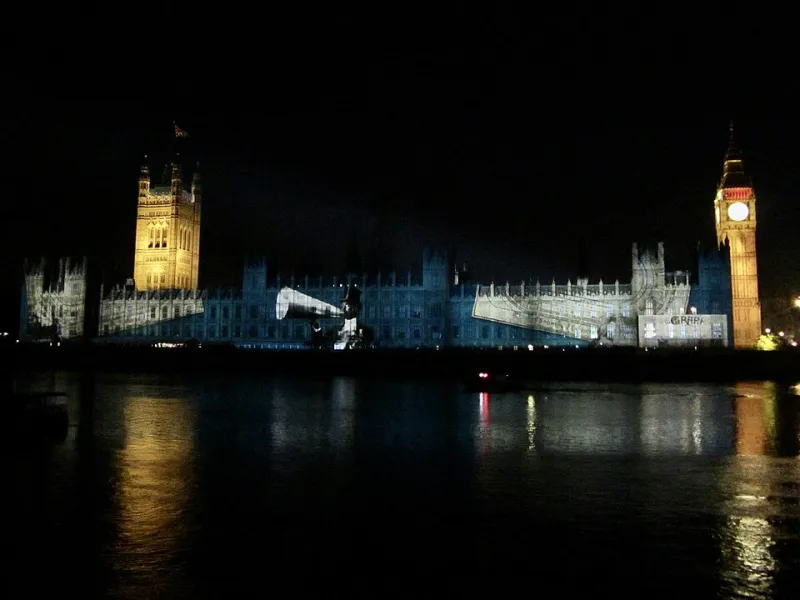
Photo: Ank Kumar, CC BY-SA 4.0, via Wikimedia Commons
There is a habit in British politics of mistaking the landslides of 1945 and 1997 for verdicts on radicalism. Attlee's victory is remembered as a socialist dawn; Blair's as a progressive tide. Both memories flatter the faithful and mislead the strategists. In truth, both elections were won the same way: by a party that had spent years persuading the country it could be trusted with the nation's ledger before asking it to sign anything.
Credibility Came First, Always
Consider the sequence. In 1945, Labour's famous manifesto may have promised a welfare state, but what won over the small businessmen, the suburban swing voter and the demobbed soldier alike was the party's record of wartime administration — Herbert Morrison running London, ministers who had proven they could run things without chaos. In 1997, the pledge card came second to the discipline of fiscal rules; the famous promise on spending was matched, word for word, by a promise to stick to Tory budgets for two years.
The radicalism followed the trust, not the other way round. That is the blueprint, and it is an economic argument before it is anything else. Voters will entertain ambitious visions from a party that has convinced them it can be left alone with the public finances. They will not entertain them from one they suspect of raiding the till.
The Width of the Offer
Gordon Brown understood this better than most, and his 2010 post-mortem — the insistence that Labour had to match its core vote with a genuinely broad appeal, that the party could not govern on the loyalty of its heartlands alone — remains the sharpest internal lesson Labour possesses. "The width of the offer" was not a slogan; it was an admission that a party of experience must still speak beyond the converted.
The irony is that the 2010 campaign proved the point in the negative. A leader tested by crisis, with a record of saving the banking system from collapse, could not convert that record into breadth because the years beforehand had narrowed the coalition. Competence without connection is a half-built bridge.
A Fragmented Country, A Harder Arithmetic
The difficulty now is that the electoral terrain has shifted beneath the old blueprint. In 1997, a united opposition faced a divided government and first-past-the-post did the rest. In 2024 and beyond, the Reform vote, the resilience of the Liberal Democrats in the shires and the SNP's rebuilding in Scotland mean no single coalition can be assembled on the 1997 model. The swing voter is no longer one voter; they are several, scattered across different grievances and different regions.
Does that make the lessons of Attlee and Blair obsolete? Quite the opposite. Fragmentation raises the premium on the one thing that travels across fragments: economic seriousness. The homeowner in the Home Counties worried about mortgage rates, the renter in Leith worried about insecure work and the pensioner in the Black Country worried about energy bills have little in common — except that none of them will back a party they believe cannot manage the economy.
Discipline Is a Policy In Itself
The uncomfortable truth for the activist wing of any party is that discipline — the refusal to overpromise, the willingness to disappoint one's own side — is not a communications strategy. It is a policy in its own right, and historically its most valuable one. Attlee's ministers were trusted in 1945 partly because they had visibly deferred gratification for years. Blair's spending plans were credible because the party had visibly refused to promise otherwise.
A Labour opposition that wishes to govern must therefore treat its own restraint as an asset to be advertised, not a liability to be hidden. Fiscal rules announced early and kept publicly. Spending commitments costed and defended in detail. The argument made, patiently and repeatedly, that a country which has watched its living standards stagnate for a decade and a half deserves a government that will not gamble its recovery on improvisation.
What Comes After the Trust
None of this argues for timidity as a destination. The 1945 government used its credibility to build the NHS in five years; the 1997 government used its fiscal headroom to transform schools, hospitals and, through tax credits, the lives of millions of working families. Trust is not the reward. Trust is the licence.
The task for Labour's next campaign is therefore twofold, and the order matters. First, win the argument that the party can be trusted with the nation's books — that experience, in the Treasury and in government, is not a relic but a qualification. Second, and only then, spend that trust on the reforms a broken Britain urgently needs: a reformed labour market for the app age, a genuinely progressive settlement on child poverty, and an economic strategy for regions long treated as afterthoughts.
Landslides are not seized. They are assembled, plank by plank, from the patient work of proving that a party of conviction can also be a party of competence. Attlee proved it in the darkest of postwar winters. Blair proved it against eighteen years of opposition. The model is not nostalgia. It is an instruction manual — and it is gathering dust at precisely the moment it is needed most.