Every Street's Fair Share: The Local Tax Reform Labour Must Finish
Across England this winter, town hall finance directors are doing what they have done for too many years: drawing up budgets in the shadow of failure. Birmingham's section 114 notice was not an isolated act of mismanagement but a warning about a system that asks local government to deliver national promises on a funding base that no longer fits. Thurrock and Woking told their own stories. In 2026 the pattern is familiar: social care precepts stretching household bills, libraries closing, road repairs deferred, and equalisation rows between councils that should be allies.
Whitehall's instinct is to answer with more pots, more bidding rounds and more ring-fenced grants. That is not a settlement; it is a queue. It rewards the councils with the strongest grant-writing teams and penalises those with the greatest need. Labour came into politics to change that calculus, not to administer it more kindly.
What Lyons Actually Said
The Lyons Inquiry into Local Government was established in 2004 and reported in 2007. Sir Michael Lyons gave it a phrase that deserved a longer life: place-shaping. His argument was that councils are not merely service delivery vehicles but the democratic authors of local places. To do that work, they needed a finance system that was transparent, flexible and fair.
On council tax, Lyons was neither a defender of the status quo nor a naive abolitionist. He concluded that the tax had a future, but only if it was reformed: regular revaluation, additional bands at the top, greater local discretion, and a serious examination of local income tax as an alternative source of local revenue. The report landed as Gordon Brown entered Downing Street. Then it was buried.
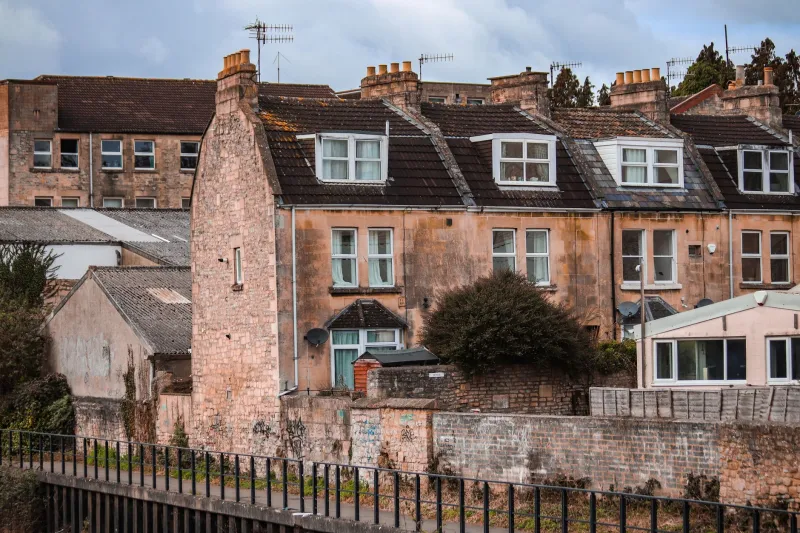
The reason was not intellectual. It was political. Revaluation creates losers, and losers write letters. A government already fighting on multiple fronts decided that the safest course was to postpone the argument indefinitely. England's council tax bands still rest on 1991 valuations. A terraced street in Hartlepool and a mansion square in Kensington are measured against a property market that predates the smartphone, the minimum wage and devolution itself.
The Cost of Deferral
Deferral is not neutral. It entrenches a tax that is visibly arbitrary, and arbitrary taxes corrode consent. The poorest fifth of households pay a far larger share of their income in council tax than the richest fifth. That is a fairness failure, not a technicality. It also distorts local economies: older owners in gentrifying areas can face bills that bear little relation to their ability to pay, while new-build households can find themselves in bands that make no sense against neighbouring properties.
Councils, meanwhile, are left to manage a system that everyone knows is broken. They raise council tax by the maximum permitted, blame central government, and central government blames them. The voter sees only the bill and the closed library. That is a failure of statecraft as much as of finance.
Fairness With a Ledger
Labour's opportunity is to finish the debate in a Brownite register: credible numbers, explicit transition, and a clear social purpose. Revaluation alone is not a silver bullet. It must be paired with a modern band structure, stronger council tax reduction for the lowest incomes, and a funding settlement that recognises need rather than lobbying skill.
The outline is not mysterious. An independent valuation cycle, perhaps every five years, would remove the temptation to postpone. Transitional relief would protect those who face a sharp increase, funded by a phased broadening of the top bands. Multi-year settlements would end the annual begging round. A fair funding formula would measure need through deprivation, population change and service pressure, not through the volume of bids submitted.
And the local income tax question should be reopened, not buried. Lyons examined it and found difficulties; he did not find heresy. For large city regions and willing councils, a local income tax could be more progressive and more accountable than a property tax frozen in the 1990s. It should be piloted, costed and debated, not dismissed by影子 briefing.
The Treasury Test
The Treasury will object that revaluation is a tax rise by another name. It need not be. A revenue-neutral settlement can shift the burden without raising the total. But even if it did raise revenue, the question is what that revenue buys: stable social care, reliable buses, functioning planning departments, and councils that can plan beyond the next financial year.
Brown's own record at the Treasury offers the relevant lesson. Fiscal credibility was never an end in itself; it was the precondition for redistribution. A government that cannot count cannot care. The same is true locally. Labour should present local tax reform not as a Westminster technicality but as the fiscal foundation of a fairer country.
The Test for 2026
The Lyons Inquiry was not a report to be filed; it was a promissory note. The councils now facing another winter of cuts are living with the interest payments on that broken promise. Labour can revive its fairness case by finishing what Brown started: a revaluation that is honest, a band structure that is progressive, and a funding system that treats local government as a partner in place-shaping rather than a supplicant at the Treasury door.
Every street deserves its fair share. The arithmetic is difficult, but the argument is not. Labour should make it, and make it now.